This post is based on my personal thoughts on Krapsakas blog.
It’s not scientific or evidence-based, and it may be triggering for some.
Take what resonates, and leave everything that doesn’t.
This post is a follow-up to the posts “Raw and honest about burnout and recovery
“VOL 1”, “VOL 2” and “VOL 3”.
After years of being in a very burned-out state, something slowly started to shift. Little by little, I started trying different ways, tools, and approaches to support my nervous system and feel a bit more like myself again.
This part is about that process. The things I actually tried in real life to rebuild myself, physically, mentally, emotionally and also on a deeper level, and what I noticed along the way.
Recovery
“How I actually rebuilt my nervous system”
One thing that people often don’t understand. In addition, society still considers it a rather taboo topic (at least in Estonia) that if you have been psychologically injured, then recovering from it is not like recovering physically.
You don’t grow a bone.
You need a very long time. And not time to do things and run around, but time to rest. So that your nervous system can rest.
This rest is not always “sitting at home between four walls”, because that is also kind of suffocating. Just nice people, lots of sleep, sensible nutrition and drinking water, going out in nature, walking, moving your body.
And all this in small amounts. Not all at once and a lot. Because the body is already in complete error, overloaded. Any greater exertion, a larger group of people, too much thinking – all this exhausts the brain and nervous system.
Scrolling through the Internet or watching series/films also doesn’t help.
The body and nervous system need real rest. Real peace. Recovery.
What did I do to revive my burned-out nervous system?
Over the years, I have tried many different ways, techniques, and medications to restore my nervous system.
What I have learned during this time is that each person has a different approach, different ways, and things that work for them.
Here is a part of what I have tried.
Time out
I don’t know how many people have the opportunity to do this, but if you do… take a break.
No work. No responsibilities. No emails. No upcoming deadlines. Just… be.
I don’t know about you, but I’ve always found it surprisingly difficult to do absolutely nothing.
Like… what do I even do? Sit? Lie down? Just exist?
But it helps. A lot.
When your brain is already overloaded, exhausted, and doesn’t have anything left to give, the last thing it needs is more input.
It needs time where you’re not asking anything from it.
Time where you simply exist.
Or at least, try to create more moments like that. They matter more than you probably realize.
Movement in nature
Oh, the number of kilometers I walked over those years…
Nature really does us good. Time outside is never wasted. But at some point, even that became frustrating.
Mostly because of the constant stress, I had gained quite a lot of weight. Normally, walking, exercising, and eating reasonably well would help me lose it again. This time, though, nothing seemed to work. That eventually became another source of stress.
But when I look at the bigger picture, over those four years, nature is absolutely something I would recommend.
And I’d recommend experiencing it without a podcast or music in your ears.
Just listen to nature itself. The birds, the animals, the insects. Notice the different trees and plants around you.
If you walk through nature with your eyes open and an open mind, you’ll start noticing so many things you’ve never paid attention to before.
And while you’re doing that, you’re also recharging your batteries and giving your nervous system a chance to recover.

Don’t isolate yourself
This is so, so important. Please don’t underestimate it.
Don’t isolate yourself.
If you don’t have friends, family, or people who feel safe to you, try to find a community. Maybe it’s a group that meets once a week or once a month. Somewhere you can safely share your thoughts and feelings.
If that feels like too much, or it’s just not for you, then consider talking to a therapist or psychologist instead. The important part is having a place where you can express yourself, talk about what’s hard, and also share the good moments.
No matter what modern society tells us or tries to sell us…
We’re not meant to go through life completely alone.
At first, I reached out to a psychologist. About a year and a half later, I moved in with one of my former classmates.
It wasn’t the perfect setup. There wasn’t much space, and there were a lot of people in the house.
But being surrounded by other people was one of the things that helped me the most.
There were days when I didn’t want to talk to anyone at all. But simply not being alone, simply sharing space with other human beings, made a huge difference.
Especially because several of them were children.
Children have this natural honesty, warmth, and curiosity about them. In their own way, they can be incredibly healing.
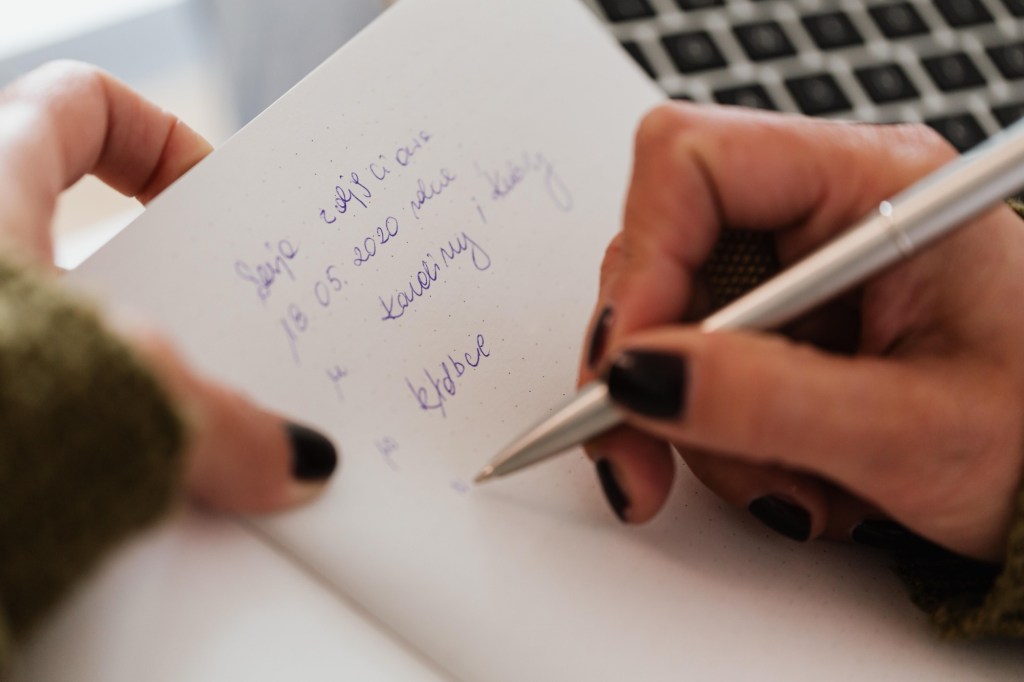
Writing feelings and thoughts in a notebook
This is actually a really good way to reflect.
Because we can tell stories all day long, to ourselves and to other people. But when you write those thoughts down on paper, and then actually read them back, you start to see whether what you’re telling yourself is just a story, like “I can’t, it’s impossible, everything is going wrong” or whether it’s actually something that has a real solution.
Another thing is that when your nervous system has been burned out for a long time, your memory is usually not at its best. Things simply don’t stick.
So writing things down, so you can come back and look at them later, is a really simple but incredibly helpful habit.
Somatic execrices
This is something I highly recommend.
Somatic exercises are basically slow, very gentle stretching movements done at an extremely slow pace, and not too many at once.
The goal is to move and release tension and stored emotions from the body.
I actually saw these exercises years ago on social media. One that really caught my attention was “The Workout Witch”, because her exercises were simple and didn’t require any equipment.
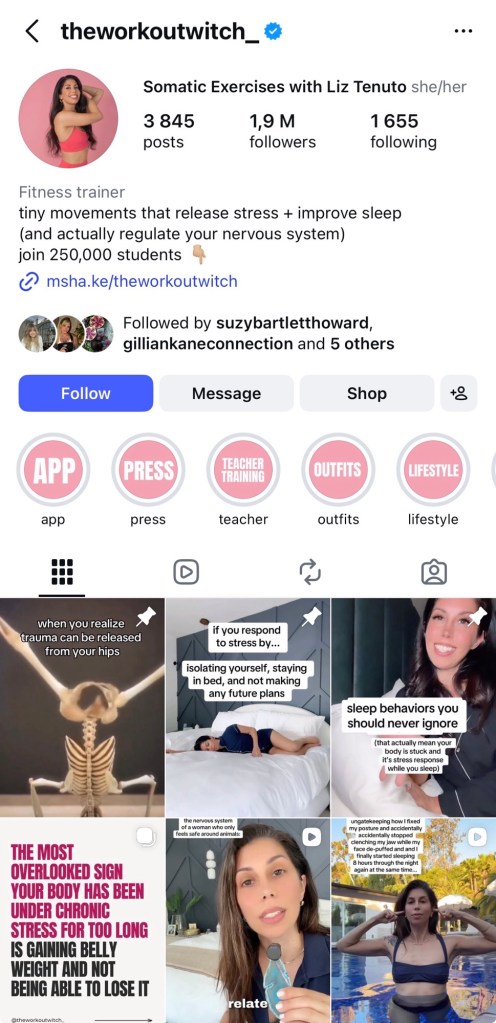
At first, I tried her free exercises that were available online (social media). And at some point, when I felt I wanted to go deeper with it, I bought her somatic exercise package. At the time it cost around 50€ (56.97 USD).
I was really happy with that purchase, especially because it came with a money-back guarantee if it didn’t suit you. And if it does suit you, you can rewatch the videos unlimited times.
I’ve gone through her 30-day exercise series several times over the years.
I would say it helps quite quickly when burnout is still in its early stages – meaning it’s been going on for a few months or a year. After that, it still supports you, but the effect is not as strong anymore. Still, it doesn’t hurt either.
There are also other somatic practitioners and people raising awareness around this topic. You just need to look around and find the one that fits you.
Creativity
One of the things that has helped me the most has been creative self-expression.
Cooking, baking, painting, crafting, coloring, cutting, tearing, gluing…
Whatever sparks your curiosity or feels exciting to you, give it a chance.
About a year before I reached my final stage of burnout, I tried to “save” myself through painting.
I made it a goal to paint at least a little bit every single day. At my previous job, I had been given one of those paint-by-numbers kits, where every numbered section matches a specific color and, little by little, the whole picture comes together.
This time, though, I created something different – an album called “Hungry for Life!”
Its purpose was to answer one simple question: What do I want my life to taste like? Inside it, I explored all kinds of topics. Things like:
- What do I actually want to do in my free time?
- What could my future home look like?
- Who are my people?
…and many more.
I’ll write a separate post about it soon, so I won’t go into too much detail here.
Getting my hands in the soil
By the time I finally got my hands into the soil, literally, I had been dreaming about growing my own plants and vegetables for two or three years.
In Estonia, we have a saying:
“If you want a lot, you get little. If you don’t want anything at all, you get nothing.”
I guess there’s some truth in staying committed to your dreams and not giving up. Eventually, they do have a way of becoming reality. 🙂
Working with plants has helped me more than I ever expected.
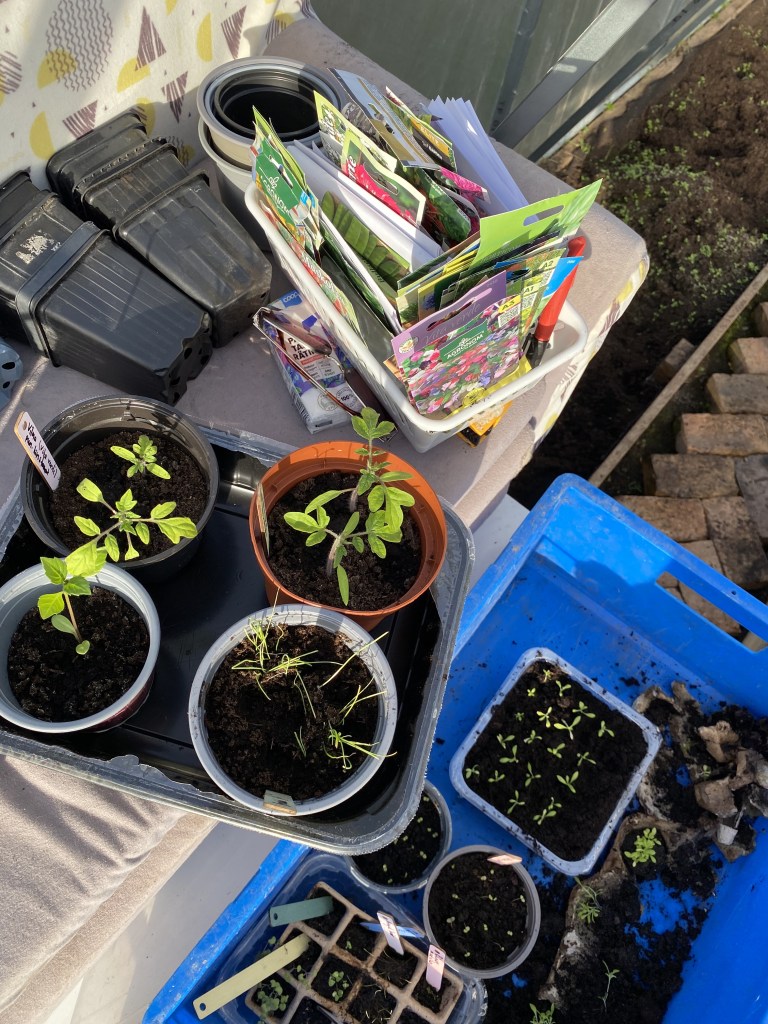
Even today, I feel like I need to go outside first thing in the morning, even if it’s just for one quick walk around the garden.
To water the plants.
To pick whatever is ready to harvest.
Just to be with nature.
It grounds me and fills my cup in a way that’s hard to describe.
And that feeling of eating something that you grew yourself, from a tiny seed into something delicious… it’s incredibly rewarding.
For the record, I’d never grown anything from seed before. I simply took it one step at a time and allowed myself to make mistakes. Those mistakes became experience, and that experience taught me how to do it better the next time.
Psychologist / therapist
Having asked for and received their help many times throughout my life, I have mixed feelings about this one.
On one hand, I’d say: yes. It helps. You’re not alone. These are trained professionals, and you get support from someone who is more neutral than the people in your everyday life.
On the other hand, psychologists and therapists are human too. No matter how hard they try to stay neutral, their own beliefs, perspectives and ways of thinking can still come through.
So it’s worth asking yourself: Does this advice actually feel true for me? Is it genuinely supporting me?
What I personally find challenging is how little time there usually is. A session is often only 45 minutes to an hour. You can spend most of that time explaining the situation, while the person across from you may still misunderstand you, simply because there wasn’t enough time to get to the core of the story.
I’ve experienced that myself and received advice that wasn’t right for me, until I explained why I disagreed and shared the missing pieces of the bigger picture.
One thing my last psychologist said to me several times really stayed with me:
“If you had a supportive family or supportive people around you, you probably wouldn’t need to come here. What you really need is supportive people.”
I’d sum it up like this: if you’re naturally very analytical, or you’re someone who strongly senses people’s energy and dynamics, therapy may sometimes feel limiting or frustrating.
But if analyzing situations is difficult for you, or you simply don’t know where to start, then working with a psychologist or therapist can be incredibly valuable.
One final thought: no matter who you work with, you don’t have to accept every interpretation or suggestion. You’re allowed to ask questions, disagree, and decide what genuinely fits your situation.
Vitamins
Folic acid, Magnesium, Vitamin B6, Vitamin D, and Ashwagandha.
My opinion on supplements is a bit mixed.
On one hand, I do believe they can help, because I’ve personally noticed the difference. During one particularly difficult period, especially through the darker months of the year, I stopped taking Vitamin D. It had a noticeable effect on my mood, my energy, and my motivation. I felt much less motivated, and my emotions were all over the place.
On the other hand, I don’t fully trust the pharmaceutical industry. There are plenty of stories about companies being bought out, formulas changing, and products that are supposed to help people but end up causing harm instead.
This spring, though, I was taking all of the supplements listed above. At that point, I was in the final stage of my burnout recovery, where I finally started feeling excited about life again. During that time, I genuinely felt like they were supporting me.
That said, I still think this is a very personal decision. Everyone has to decide for themselves whether supplements are something that feels right for them or not.
Reiki
Reiki is a pseudoscientific form of energy healing, a type of alternative medicine created by Mikao Usui in Japan in the 1920s. Reiki practitioners use a technique called palm healing or hands-on healing through which, according to practitioners, a “universal energy” is transferred through the palms of the practitioner to the client, to encourage emotional or physical healing.
Source: Wikipedia
For me, Reiki has been a really powerful way to restore energy.
When anxiety, or any other intense emotion gets too big and I can’t really handle it on my own anymore, Reiki has always been something that helps me neutralize that feeling, or at least reduce it quite strongly.
A lot depends on the practitioner, whether you trust them or not, and how receptive you are yourself. If you go in with too many expectations, you’ll most likely get disappointed (I’ve been there myself). But if you go in with an open mind, it tends to work really well.
What it looks like is this: you lie on a table, similar to a massage table, and the Reiki practitioner gently touches different parts of your body. You can feel this kind of warmth, like energy is vibrating or moving between the two bodies.
Access Bars
Access Bars is a gentle treatment involving light touch on 32 specific points on the head, aimed at promoting relaxation and reducing stress. It is part of the Access Consciousness movement, which offers various tools for personal change and empowerment.
For me, this was kind of a nice little entertainment experience.
I think a lot depends both on the practitioner and on the environment it’s done in. The goal is basically to help you release your excess thoughts.
I’ve had Access Bars sessions in a quiet, calm environment, but also in a room where there were several people talking to each other. Completely different experience.
When the environment is calm and the practitioner is good, it can actually feel really nice and your thoughts do quiet down — like you don’t have 50 tabs open in your head 24/7.
It’s also important to mention that this light, calm state usually lasts only a couple of days, until you’ve filled your head with thoughts again.
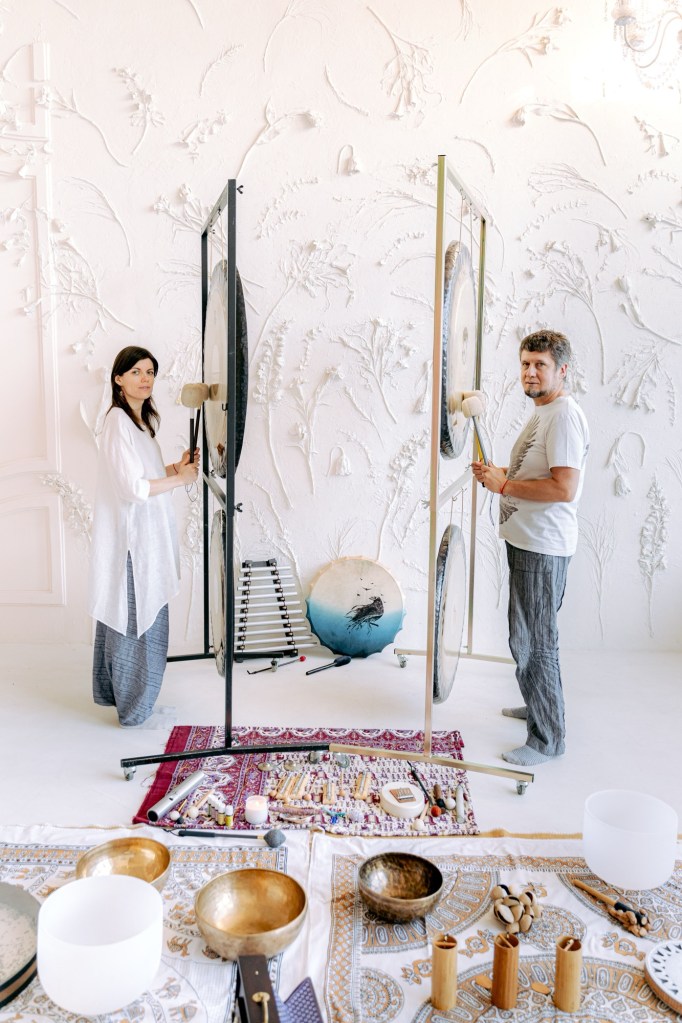
Gong hypnosis journey
For me, one of the most pleasant things, IF it’s done with a very small group.
I’ve experienced it twice in very different settings. One time there were about 12 people in the room, and another time the whole hall was packed with people. We were literally like sardines in a can. There was no sense of space, no calm, no ease.
The first journey was incredibly nice – open feeling, relaxed body, an amazing gong master playing the instruments, with both soft and strong gong sounds.
I got my memory healed. I couldn’t remember my childhood from about 3rd to 9th grade, and during that sound journey, those memories came back.
The second journey – completely awful. Same sound practitioner, but the space was full. I couldn’t relax into the experience at all, because someone next to me was constantly moving, someone was coughing, someone was sniffing… I ended up leaving with the heavy, anxious energy of several other people stuck on me. It took me the whole evening to clear myself from other people’s emotional and energetic load.
So overall – it can be a really beautiful, calming experience. I truly recommend it.
But be very mindful of how many people are attending. Even ask the facilitator beforehand.
Expressing myself
This was one of the biggest things that helped me.
I stopped trying to be liked by everyone. I stopped keeping my words to myself.
Instead, I started expressing myself honestly and authentically. I stopped hiding.
I had been hiding for years.
That change cleared a lot of people out of my life.
Very few stayed.
But it also brought new people into my life. People I connect with on a much deeper level. People I genuinely trust, which wasn’t something I used to do.
Not everything that feels like a loss is actually a loss.
Sometimes, you have to make space for the new before it has a chance to enter your life.
Changing my job and where I lived
This probably sounds quite drastic.
But in the end, it was one of the biggest things that helped me. By that point, I had been burned out for four years. I had tried everything I could think of to help myself, but nothing made a significant difference.
I was simply exhausted.
So I left my full-time job, packed up my whole life in the city, and moved to the countryside.
A completely new environment. A new home, new surroundings, new people.
It really can work wonders.
Because new is interesting. In a way, you’re giving your brain a physical reset simply by changing your environment.
You have to build new routines. Maybe getting to the grocery store isn’t as quick or convenient anymore. Or maybe it’s actually easier now.
Maybe there’s a little café around the corner with amazing pastries.
Or maybe you’re surrounded by more greenery and nature than ever before.
Whatever your new environment looks like, one thing is certain:
It’s new.
And sometimes that’s exactly what you need. A fresh environment can bring excitement back into your life, or at the very least, let some fresh air into it.
In summary
There is no perfect method for fixing a burned-out nervous system. No golden routine. No one-size-fits-all solution.
I wish there was. Would have saved me a few years.
What I found instead is that recovery is built from many small things, and their effect changes depending on the phase you are in.
Something that supports you at one point might feel useless or even irritating later. Something simple can suddenly become exactly what your system needed.
So it was less about finding the “right method” and more about staying honest with what was actually working in real time, not what was supposed to work.
Your system will tell you pretty fast what’s real and what’s just noise.
This series was simply a look into what burnout felt like from the inside, and what supported me in slowly rebuilding my nervous system. And that’s the end of it.
With love,
Krapsakas Agnes

If this part of the journey felt familiar in any way, it might be because you’ve been there too – in that space where nothing works the same way anymore, and you start looking for something that actually supports you.
Krapsakas pieces were created from that kind of reality. For the phases where you don’t want more noise, just something simple that reflects where you are without trying to fix you.





 Krapsakas
Leave a comment